Is Kimono Cultural Appropriation?
When I suggested the idea of wearing kimono during their visit to Japan, the client asked me,
“Is it okay for us to wear kimono? We’re white and fully American.”
I replied,
“It’s totally fine. As long as you’re appreciating the culture and treating it with respect. Besides, kimono are so delicate that they can’t even be washed in a regular washing machine.”
Exactly a week ago, I had the wonderful experience of wearing kimono myself.
The host I stayed with mentioned that she had a kimono dressing lesson with her teacher, and I immediately messaged her saying, “Can I please watch you get dressed?” Saying it out loud now makes me laugh a little, but kimono truly feels like wearable art to me.
There are so many layers and details involved. First, you wear an inner garment called a juban, which is usually white. Then, the kimono itself is chosen carefully depending on the season, occasion, fabric, and even the symbolism of the patterns. It’s not simply about choosing your favorite color. Certain flowers and designs represent specific seasons and moments in time.
Not only do you choose the kimono, but you also select the obi, the sash that secures everything together. Underneath, there’s also something called a datejime, which helps keep the layers in place. Every detail has a purpose.
Honestly, it’s not easy spending an entire day wearing kimono, especially during meals because everything is wrapped quite tightly. But at the same time, it made me think — this used to be everyday clothing for Japanese people long ago. Can you imagine?
The day I asked my host if I could watch her get dressed in kimono, I never expected that I would get the chance to wear one myself.
She simply said,
“When do you ever get the chance to wear kimono? Let’s do it. What’s your height?”
When I arrived, the choice was between kimono or yukata. Yukata are lighter and thinner, making them perfect for summer festivals and hot weather. Since it was still a little chilly, we leaned toward kimono. The only kimono my host had available for me was a dark black one with subtle patterns. When she mentioned that it was Oshima Tsumugi, I was shocked.
I had actually learned about Oshima Tsumugi through a girl I met on social media. We became friends while exchanging stories about our hometowns, and she taught me how rare and special Oshima Tsumugi truly is.
Oshima Tsumugi is a traditional silk textile made on Amami Oshima Island, located between mainland Japan and Okinawa. The fabric is dyed using mud, creating its signature deep black color. Every step — dyeing, weaving, sewing — is incredibly detailed and time-consuming. Because of this craftsmanship, only a limited number of Oshima Tsumugi kimono are made each year.
Knowing this, I honestly felt hesitant to wear it so casually.
But when the teacher arrived, they both decided that I should wear the Oshima Tsumugi.
These are the photos I received later that day.
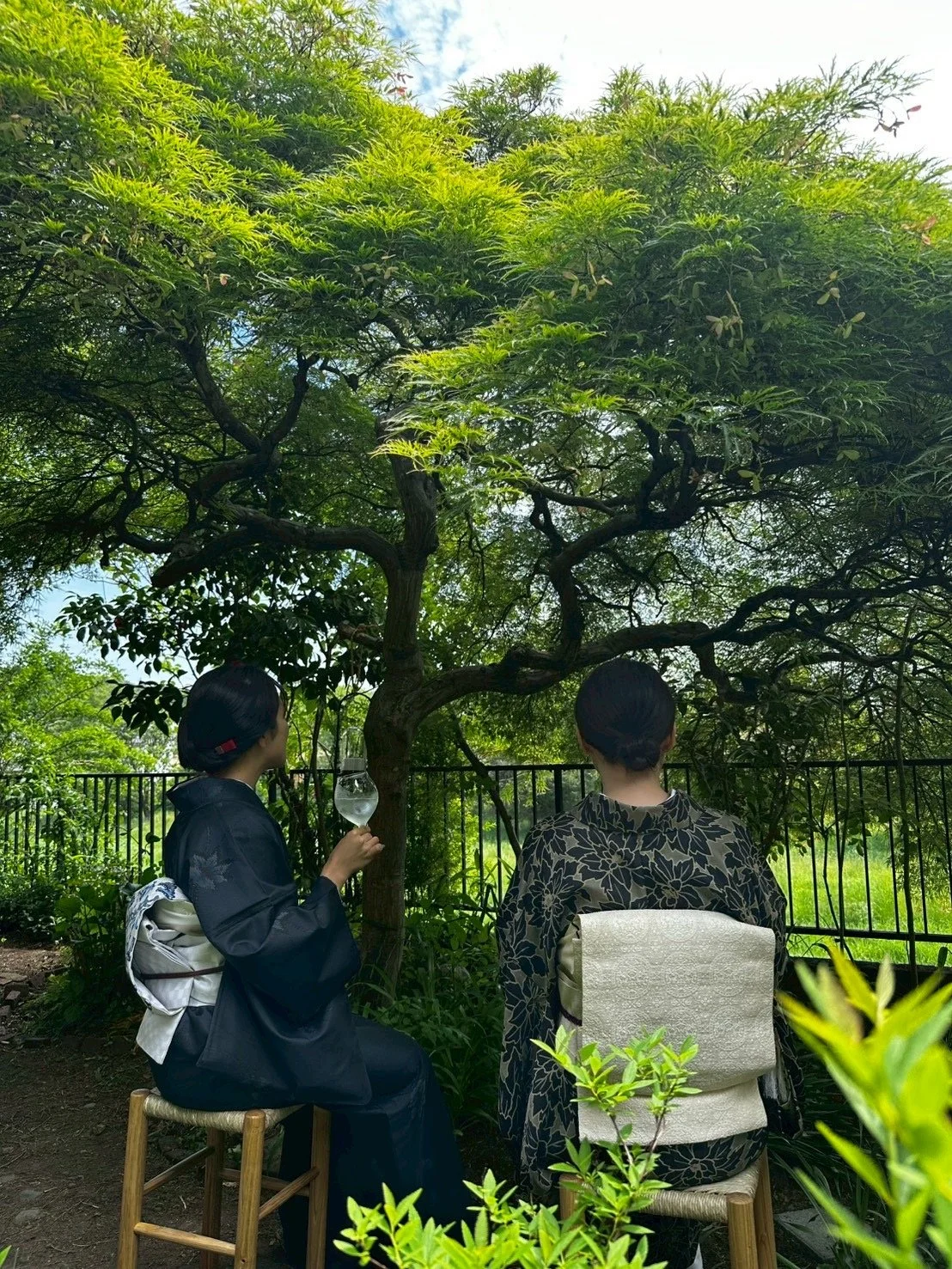
Cheers with Ryusendo Soda - Looking at the River
I’m so grateful that I got to meet the Kimono teacher. I say “the” but I’m hoping that she becomes my Kimono teacher very soon. She says she wears Kimono almost everyday leaving her house. How cool is she!?
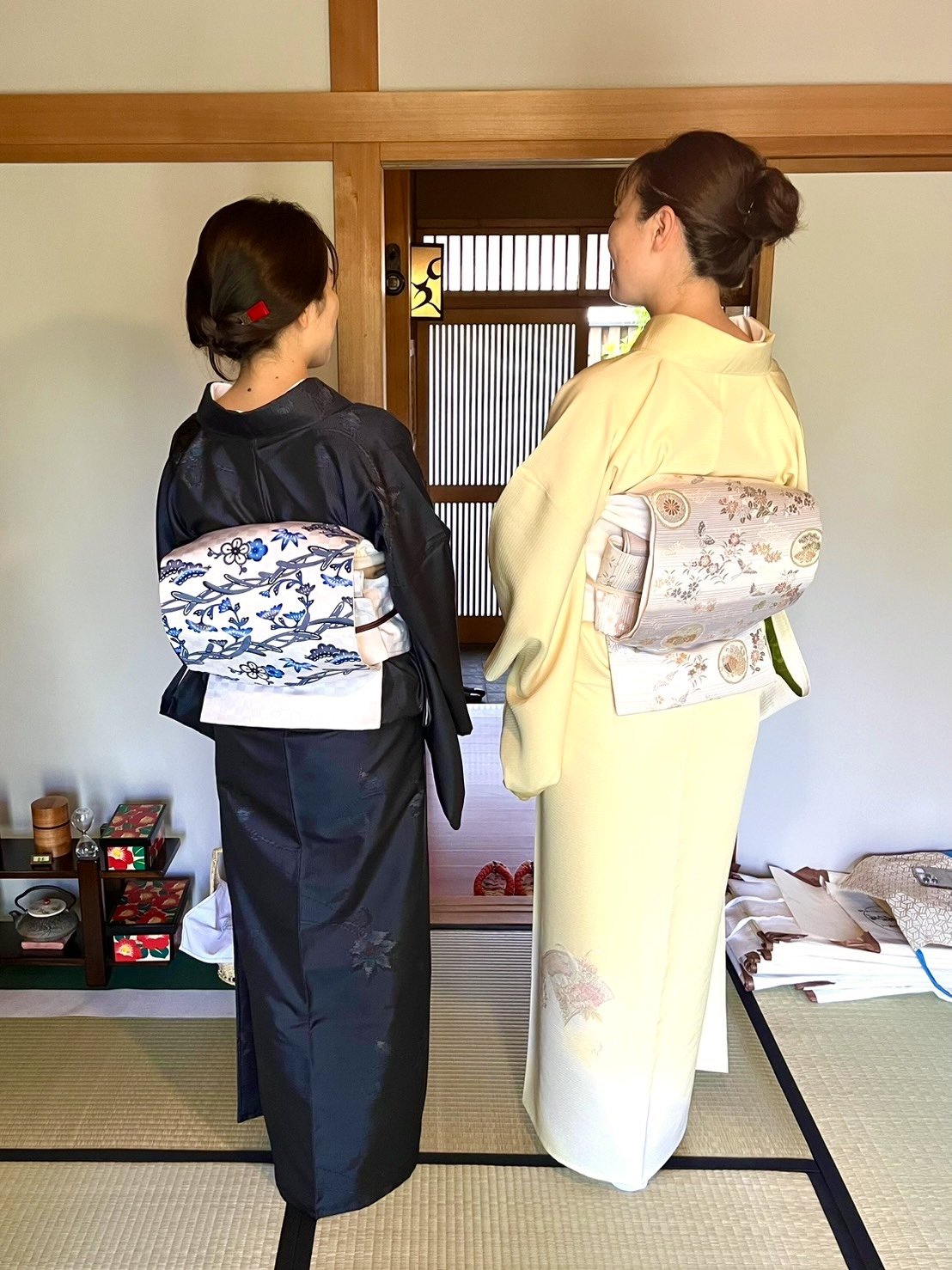
Slow yet Peaceful Moment
Posing with my lovely host who is sooooooo genuine and kind hearted person. She is literally the nicest person I’ve ever met!! She runs a Japanese theme guest house which is where I stayed for overnight and I regret not staying for more than a night because her presence and her generosity was what made the experience special. Pretty much everything in this guest house is made and produced in Iwate prefecture. It’s so cool!
Also, my great-grandma was right. She once told me that the mole on my neck was a lucky mole that meant I would be blessed with clothing and fashion in life. I think she might have been right, because I received so many compliments that day about how well kimono suited me!
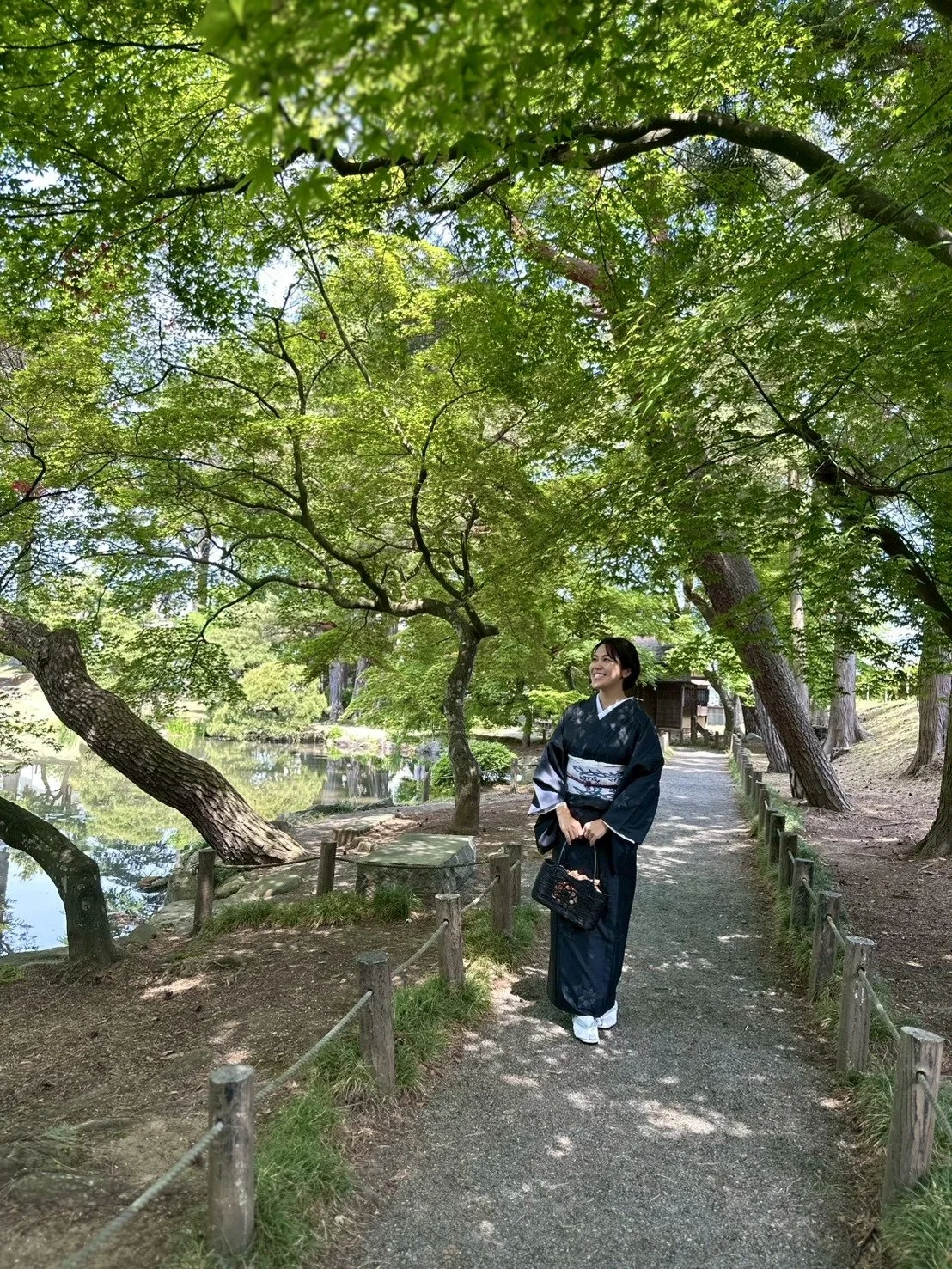
Short Walk in the Garden
The kimono teacher thought me how to pose! Yay!